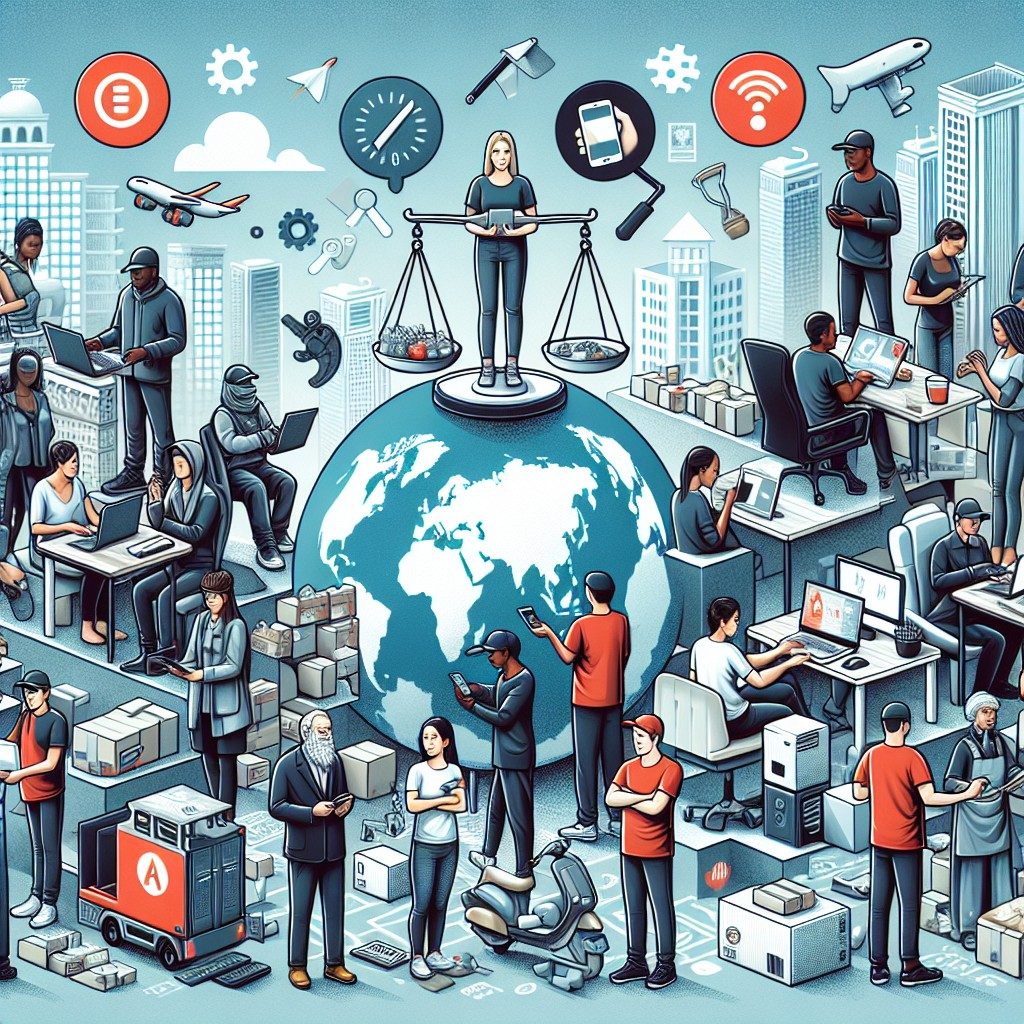
The gig economy has matured into a significant component of labor markets globally, prompting governments and organizations to reassess worker protections. As this sector evolves, the nature of employment and associated rights are undergoing critical transformations.
Understanding the expansion of the gig economy
The gig economy refers to the labor market characterized by short-term contracts, freelance work, and independent contracting rather than traditional, permanent employment. Platforms like ride-sharing, food delivery, and freelance marketplaces have driven this growth. Estimates suggest that millions of workers worldwide rely on gig work as their primary or supplementary income. The flexibility offered attracts both workers and businesses, but it also exposes workers to various risks due to limited protections.
Legal challenges and evolving worker classifications
One of the most pressing issues in the gig economy is the classification of workers. Traditionally, gig workers have been considered independent contractors, which exempts platforms from providing benefits like minimum wage guarantees, health insurance, or paid leave. However, several countries have begun implementing legislation to redefine these classifications. For instance, in the European Union, proposals aim to grant gig workers more rights by acknowledging the degree of control companies have over their workforce. Similarly, some U.S. states have enacted laws that push for gig workers to be classified as employees under certain conditions. These changes reflect a growing consensus that the traditional binary classification fails to capture the nuanced realities of gig work.
International approaches to enhancing protections
Different regions are adopting varied strategies to improve gig worker protections. In the United Kingdom, recent regulations have focused on ensuring transparency in payment and working conditions. In India, government efforts include social security schemes extended to gig and platform workers to provide health and accident insurance. Australia has initiated inquiries into wage theft in the gig economy, emphasizing enforcement of existing labor laws. Multilateral organizations like the International Labour Organization are also engaging with stakeholders to develop frameworks that balance flexibility with fair labor standards on a global scale.
The role of technology and platform responsibility
Technological platforms are central actors in the gig economy. As intermediaries, their algorithms determine task allocation, pricing, and worker evaluation. Recognizing their influence, regulators are increasingly holding platforms accountable for ensuring fair treatment. Some companies have started to offer benefits such as insurance, training, and dispute resolution mechanisms voluntarily, anticipating regulation or responding to worker demands. The relationship between technology and labor rights remains a dynamic space, highlighting the need for transparent practices and oversight in platform governance.
Economic and social implications of enhanced protections
Enhancing protections for gig workers has broad economic and social consequences. Improved benefits can reduce income insecurity and promote well-being, potentially attracting a more stable and skilled workforce. However, increased obligations for companies might lead to higher operational costs, which could impact pricing and availability of gig services. Policymakers face the challenge of striking a balance that preserves the gig economy’s benefits—such as flexibility and innovation—while reducing precariousness and ensuring dignified work conditions.
As the gig economy continues its expansion, regulatory frameworks and corporate practices will likely keep evolving. This maturation signals a shift toward recognizing gig workers as vital contributors to modern labor markets, deserving of adequate protection and fair treatment.
Frequently Asked Questions about gig economy
What is the gig economy?
The gig economy is a labor market comprising short-term contracts and freelance work instead of permanent jobs, often facilitated through digital platforms.
How are worker protections changing in the gig economy?
Worker protections are evolving through new laws and policies that redefine worker classification, enhance benefits, and hold platforms accountable across various countries.
Why is worker classification important in the gig economy?
Classification determines if gig workers receive employee benefits and protections; misclassification can leave workers without basic labor rights.
What role do platforms play in the gig economy’s labor conditions?
Platforms control job allocation and remuneration and are increasingly responsible for ensuring fair treatment and transparency toward gig workers.
How do enhanced gig economy protections impact the economy?
They aim to reduce worker insecurity and improve well-being but may also increase costs for companies, affecting service prices and market dynamics.